Film Lighting Techniques

There are a variety of techniques used when lighting a scene, each with a different effect on the atmosphere and mood.

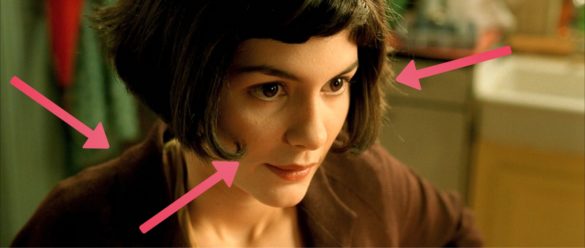
Softness of the lighting: the softness of the lighting used is important, as it can clearly dictate what atmosphere a scene has by changing the shadows present in the shot. Harsh light leads to more shadows and a more striking scene with more shadows. This is often used in horror or action movies. Soft light leads to less shadows and a more comfortable, peaceful scene. This type of lighting is often used in family movies and comedies.

Higher key light: high key light is a lighting effect created by using more fill lights to remove shadows and keeping a balanced brightness throughout the frame. High key light is used to balance the lighting to keep the atmosphere calm and peaceful.

Diffused overhead lighting: there are ways to diffuse light using many different materials which are often used in close up shots.

Hard film lighting: small light sources will lead to more depth in the shadows on a shot, which is used to create dramatic effects and is popular in film noirs.
Cinematic Lighting

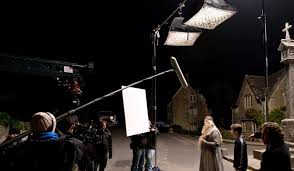
Cinematic light is crucial for any type of movie because it can emphasize certain actions and scenes. With good creative use of cinematic lighting, a film can be vastly improved.

Some key decisions cinematographers make when deciding on lighting are:

  1. What props should be emphasized
  2. Whose perspective is the shot through
  3. What differences exist in the characters in the scene
  4. What emotions will a certain type of lighting express

Once these crucial questions are answered by the directors and cinematographers, it becomes clear which angle and type of lighting should be used in a scene.

Cinematic lighting adds depth to a film. The chosen form of lighting adds depth and atmosphere to a scene that otherwise would not exist. One key difference between low and high budget movies is the quality of lighting, which is easily visible when looking for it.

3 Point Lighting in Film

Lighting is crucial to a film and often overlooked by the audience. The type of lighting used can dramatically change the tone of a character or feel of a scene.

Basic lighting: 3 point lighting setup

The standard method of lighting in cinema is the three point lighting setup. This includes lighting from three different directions and is used to set the target apart from their background.

Generally, three point lighting is used from the front, back and side.

Key light: this is the light that is mainly used. It usually targets the subject from the angle of the camera, leading to a bright, clear light.

Fill lights: these lights are used to fill in shadows in the scene. This leads to further emphasis of a subject.

Back light: as shown by the name, back light shines from the rear and leads to a bright, clear outline.

Story Boarding

Every film begins with a storyboard that outlines the basic scenes and shots used in a movie. A story board is a visual aid that describes what will occur in a film or animation. It is important to the production process by giving the director and cinematographer an outline of what to follow when filming the movie. Storyboards consist of a series of images that show a quick snapshot of each scene.

When a script is available, it shows the general flow and narrative structure of the media text. But the way to transfer this text into a visual guide is through the storyboard.

Good storyboards are extremely useful for big action sequences or complex scenes.

Preliminary Task

For my preliminary task, my group and I filmed a short movie in school. The story consisted of a rebellious student sleeping in class and being caught by the teacher who proceeds to kick him out of the class. Our group consisted of 3 members, a cinematographer and 2 actors. The film was 1 minute long and took a few days to film.

The first step we had to undertake was planning the plot, lighting and cuts, as well as creating a story board that outlined the film. Next, we chose our classroom as a location due to the clean lighting and perfect setting. After making all preparations we needed, we filmed many different versions of the same scenes using different camera angles and acting styles and selected the best ones to put into the film.

To edit the movie we used iMovie, a simple and easy to use application that allowed for us to create fade-outs and a title page and credits.

Some issues we encountered was difficulty recording the dialogue in our scenes due to interference from other students, as well as a lack of variety in our setting.

Narrative Theory

The primary forms of narrative structures are:

  1. Novels
  2. Poems
  3. Drama
  4. Short stories
  5. Novellas
  6. Myths/legends

Each media text uses a different narrative structure. Long films or movies have the liberty to stretch out their plot, while a poem or short story must condense all events to fit them into the text.

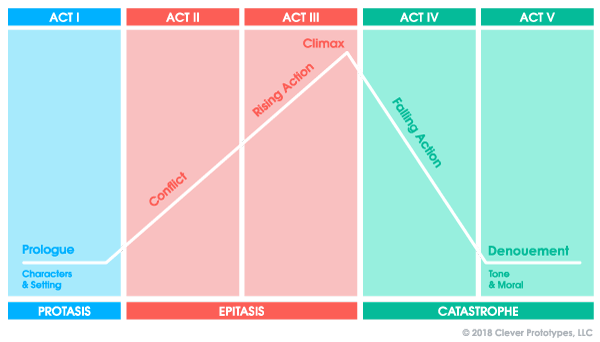
Any story begins with a prologue, or exposition, where the setting and characters are introduced. Next, the epitasis begins, beginning with introduction of the conflict and rising action which ultimately lead to the climax. Finally, the conclusion begins with the falling action and resolution, where the tone and moral are revealed.

Narrative Structure

A great story has a beginning, middle, and end. But it is rarely so simple. A good author weaves in twists and turns that make the beginning, middle and end flow together well, which is often what separates a mediocre film from a superb one: the story arc.

The three acts of a story are what give it structure to follow. There are multiple climaxes, usually one main one in each of the three acts, which are:

  1. Set up
  2. Confrontation
  3. Resolution

The main climax in the story, which is built up to in the exposition and rising action, is what drives every stage of the story. This could be a duel in a Western film, or a confrontation between a husband and wife.

Overall, narrative structures are crucial for making any media text easy to follow and enjoyable.

Factors of Representation

The most commonly addressed factors of representation are gender, disabilities, race, and age.

Gender: Media texts include more roles for men than women. This gap is shrinking but still exists. The roles played by men and women are vastly different: men are often leaders and soldiers, while women are often objectified and shown as beautiful and fragile.

Image result for rambo

Race: Racism, stereotyping and cliches are often used when minority roles are being represented. Minorities are underrepresented in the media and shown as criminals or rule breakers.

Disability: Disabled actors and roles often portray veterans who are struggling to get accustomed to their new lives. Many movies showing the lives of the disabled show that they are not so different as the rest of us.

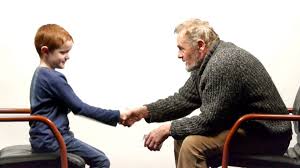
Age: Young people are shown in media to be naive, lazy, entitled brats. They often go through a life changing experience where they end up being mature men and women. The elderly, on the other hand, are shown as being stuck in their ways, boring and pessimistic.

Image result for old and young person

Representation in Media

Representation is someone’s concept of existence, codified into a series of signs and symbols. In short, it is the way directors and actors portray a certain part of society (eg: men and women). Representation is often confused with stereotyping, and while similar, representation is the way certain types of people are portrayed in media specifically, not life in general. Representation is often a political and prejudiced issue, and usually has a positive or negative connotation (is rarely unbiased).

Image result for representation in media

In order to fully appreciate the part representation plays in a media text you may consider:

  1. Who produced it?
  2. Who is represented in the text?
  3. How are these people represented?
  4. Why was this representation selected?
  5. What frame of reference does the audience use?
Design a site like this with WordPress.com
Get started